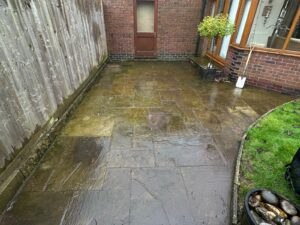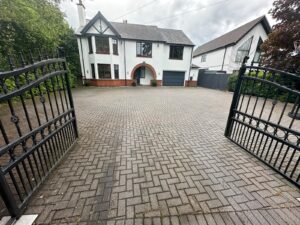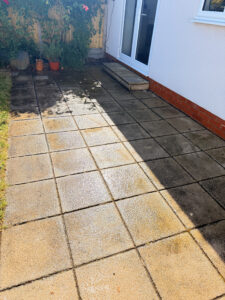
Black spots appearing across your patio can be frustrating. At first, they may seem like nothing more than a cosmetic problem. However, those dark marks can be a sign of biological growth, moisture retention and dirt becoming embedded into the surface.
For homeowners looking for patio black spot removal, understanding what causes these marks is an important first step. Black spots can develop on paving slabs, natural stone, concrete and other outdoor surfaces exposed to the UK’s changing weather.
In Rugby, regular rain, damp conditions, shade and organic debris can create the right environment for algae, lichen and other growth to settle on a patio. Over time, the surface can become darker, dirtier and more difficult to maintain.
The good news is that effective patio cleaning can help restore the appearance of your outdoor space while making it easier to maintain.
What Causes Black Spots on a Patio?
Black spots do not usually appear overnight. They often develop gradually as the patio is exposed to moisture, dirt and organic material.
One common cause is lichen. Lichen can attach itself firmly to paving and natural stone. Its dark appearance can make individual slabs look permanently stained, even when the rest of the patio looks relatively clean.
Algae can also contribute to dark patches. It tends to thrive in damp and shaded areas, particularly where sunlight is limited. If leaves, soil and other organic matter remain on the patio, they can provide additional moisture and nutrients.
Weather also plays a major role. During wetter periods, patios may remain damp for longer. When combined with poor drainage or limited sunlight, this can encourage biological growth.
Common causes of patio black spots
| Cause | What it can do | Why it becomes noticeable |
|---|---|---|
| Lichen | Creates dark, stubborn marks | It attaches firmly to paving |
| Algae | Produces green, brown or dark growth | Damp conditions encourage it |
| Dirt and organic debris | Creates a dull, stained appearance | Leaves and soil accumulate over time |
| Moisture | Keeps surfaces damp | Shaded areas dry more slowly |
| Weathering | Changes the surface appearance | Rain and seasonal conditions affect paving |
The important point is that black spots are often more than simple dirt. They can indicate that the patio needs a deeper clean rather than a quick sweep or rinse.
Why Black Patio Spots Can Become a Problem
The biggest concern with black spots is not always the appearance itself. Organic growth can make paving more difficult to keep clean and may contribute to a slippery surface when combined with moisture.
This can be particularly noticeable during autumn and winter. Wet leaves, rain and reduced sunlight can create conditions where patios remain damp for longer.
A patio that looks fine during a dry afternoon can feel very different after rainfall. Areas covered with algae, moss or other growth may become slippery underfoot.
For households with children, older family members or pets using the garden regularly, maintaining a clean walking surface is especially important.
Black staining can also become harder to remove when it is allowed to build up over several seasons. Dirt becomes embedded in surface texture, while biological growth can become firmly established.
This is why dealing with the problem earlier can be easier than waiting until the patio has become heavily stained.
Is Pressure Washing a Good Way to Remove Black Spots?
Pressure washing can be an effective part of patio cleaning, but the technique needs to match the material being cleaned.
Not every patio should be treated with the same pressure. Natural stone, concrete, brick and other materials can have different characteristics. Excessive pressure or an unsuitable cleaning method may cause surface damage.
A proper assessment should therefore come before cleaning.
Jet Wash Innovations uses a combination of pressure washing and soft washing techniques depending on the patio surface and its condition. The company’s patio cleaning process includes inspection, pre-treatment, deep cleaning and hand-finishing.
The goal should not simply be to blast the surface with water. Effective cleaning involves choosing the appropriate method, preparing the surface and removing contamination thoroughly.
Safety matters too. The Health and Safety Executive highlights the importance of using pressure equipment safely, selecting suitable equipment and operating it within its safe limits.
For homeowners, this is another reason to avoid assuming that maximum pressure automatically means better cleaning.
What Does the HSE Say About Pressure Washing Safety?
Pressure washing equipment should be used with appropriate care and within its safe operating limits. The Health and Safety Executive (HSE) advises that pressure equipment should be suitable for its intended purpose, properly maintained and operated safely. It also highlights the importance of appropriate instruction and training for people using pressure equipment.
The HSE also provides specific guidance on the electrical risks associated with steam and water pressure cleaners. This includes the importance of maintaining equipment and carrying out appropriate checks, particularly because pressure washing equipment combines water with electrical components.
For more information, homeowners and cleaning professionals can refer to the HSE guidance on pressure systems and its guidance on electrical risks from steam/water pressure cleaners.
Patio Black Spot Removal Starts With Identifying the Surface
Before starting patio black spot removal, it is useful to identify what your patio is made from.
Natural stone may require a more controlled cleaning approach than some concrete surfaces. Sandstone, limestone, slate and other materials can vary in hardness and porosity.
Concrete paving may tolerate more intensive cleaning, but it still needs to be assessed for cracks, damaged joints and existing wear.
Brick patios also need care because aggressive cleaning can affect older or more weathered surfaces.
The condition of the joints matters as well. If pointing has already deteriorated, strong pressure directed directly into the joints may worsen the problem.
A careful patio cleaning service will consider the material, age, condition and level of contamination before selecting the cleaning method.
Why Cleaning Alone May Not Stop Black Spots Returning
One common misconception is that removing visible staining means the problem has completely disappeared.
Cleaning can dramatically improve the appearance of a patio, but outdoor surfaces remain exposed to rain, moisture, leaves, shade and organic debris. As a result, new growth can eventually develop.
This is particularly relevant for patios surrounded by trees or located in shaded parts of the garden.
After cleaning, simple maintenance can help slow the return of staining. Sweeping away leaves and debris, keeping drainage clear and avoiding prolonged accumulation of organic matter can all help.
Where suitable, additional treatments or sealing may also be considered. The right option depends on the patio material and its condition.
Jet Wash Innovations also offers sealing and repointing as optional services alongside its patio cleaning work.
How Often Should You Clean a Patio in Rugby?
There is no single schedule that works for every property.
A patio exposed to full sunlight and good drainage may stay cleaner for longer than one beneath trees or beside a north-facing wall.
Rugby’s damp weather can also contribute to moss and algae growth, particularly during wetter seasons.
As a general maintenance approach, many homeowners benefit from having their patio assessed and cleaned when staining or organic growth becomes noticeable rather than allowing several years of build-up.
Regular cleaning can make future maintenance easier because heavy deposits have less opportunity to become firmly established.
If your patio has started developing black spots across multiple slabs, it may be worth arranging an assessment rather than trying increasingly aggressive DIY cleaning methods.
DIY Cleaning vs Professional Patio Cleaning
There are many patio cleaning products and domestic pressure washers available, so it is understandable that homeowners may want to tackle black spots themselves.
For light surface dirt, routine sweeping and gentle cleaning may be enough. However, stubborn black staining can be more difficult.
A domestic pressure washer can also produce very different results depending on the nozzle, pressure setting, distance from the surface and technique used.
Incorrect cleaning can leave visible lines, uneven patches or damaged joints. On some materials, excessive pressure may remove more than the homeowner intended.
Professional cleaning offers a more controlled approach. The surface can be assessed first, followed by appropriate treatment and cleaning.
This is particularly useful when a patio combines different materials or has areas of heavy staining alongside more delicate sections.
What Does a Professional Patio Clean Involve?
A thorough service should involve more than simply pointing a pressure washer at the paving.
At Jet Wash Innovations, the process begins with an assessment of the patio. This helps determine the surface type, condition and level of staining.
A pre-treatment can then be applied to help break down moss, algae and accumulated dirt. Once the surface has been prepared, professional equipment can be used for deep cleaning.
Flat surface cleaners and rotary systems can help produce a more even result across larger areas. Edges, corners and detailed sections may then receive additional attention by hand.
Finally, the patio can be inspected to identify areas that need further cleaning or maintenance.
This approach helps ensure that patio black spot removal is focused on the condition of the whole surface rather than just making the most obvious marks disappear.
Signs Your Patio Needs More Than a Quick Wash
Some signs that your patio needs deeper cleaning are easy to identify, while others can be less obvious.
Look for:
- Dark spots that remain after rainfall has dried
- Green, brown or black growth around paving
- Slippery areas when the surface is wet
- Dirt accumulating around joints
- Heavy organic debris on the surface
- Noticeably darker sections beneath trees or in shaded areas
- Staining that does not improve with routine cleaning
If brushing and basic cleaning no longer make much difference, a professional assessment may be worthwhile.
Addressing build-up before it becomes extensive can make the patio easier to maintain.
Keeping Your Patio Cleaner After Treatment
Once your patio has been cleaned, a few simple habits can help maintain the result.
Sweep the surface regularly to remove leaves, soil and other organic debris. Pay particular attention during autumn when falling leaves can remain wet against the paving.
Try to keep drainage routes clear so that water does not remain on the patio for extended periods.
Trim back vegetation where possible if it creates heavy shade or drops large amounts of organic material onto the surface.
It is also worth checking the patio after periods of prolonged wet weather. Small areas of new growth are generally easier to deal with than extensive build-up across the entire surface.
For further information about safe pressure-cleaning practices, the Health and Safety Executive provides guidance on pressure equipment and appropriate precautions.
Why Choose Jet Wash Innovations for Patio Cleaning in Rugby?
Jet Wash Innovations provides patio cleaning in Rugby for homeowners who want to restore tired, stained and weathered outdoor surfaces.
The company works with different patio materials, including natural stone, concrete slabs and brick patios. Its cleaning approach combines pressure washing and soft washing where appropriate, rather than relying on one method for every surface.
The team also uses biodegradable cleaning products and professional equipment as part of its exterior cleaning services.
If black spots have gradually taken over your patio, the issue does not necessarily mean that the paving needs replacing. In many cases, a suitable cleaning process can make a significant difference to its appearance.
For local homeowners, you can learn more about patio cleaning in Rugby and see how the service is tailored to different outdoor surfaces.
Final Thoughts on Patio Black Spot Removal
Those black spots may look like simple marks, but they can be a sign of biological growth, moisture and accumulated organic debris.
Leaving them untreated can make the patio increasingly difficult to maintain. Wet conditions can also make contaminated surfaces less pleasant and potentially more slippery underfoot.
Effective patio black spot removal starts with identifying the cause and understanding the material being cleaned. From there, the right combination of treatment, pressure washing and careful finishing can help restore a cleaner appearance.
For homeowners in Rugby, regular patio maintenance can also reduce the amount of heavy build-up that develops between professional cleans.
If your patio has become covered in stubborn black spots, moss or algae, now is a good time to assess its condition and consider a suitable cleaning solution.
If your patio is covered with stubborn black spots, algae, moss or built-up dirt, contact Jet Wash Innovations today to discuss your patio cleaning requirements in Rugby and the surrounding areas.
Frequently Asked Questions
Black spots can be caused by lichen, algae, moss, dirt and organic debris. Damp weather, shade and moisture can encourage this growth, particularly on patios that do not receive much direct sunlight.
Pressure washing can remove many types of staining and biological growth, but the pressure and cleaning method should be suitable for the patio material. Using excessive pressure may damage some surfaces or joints.
The ideal frequency depends on the patio material, surrounding vegetation, shade and local weather conditions. Many patios benefit from periodic deep cleaning, especially when moss, algae or black staining becomes visible.
They can return because patios remain exposed to rain, shade, leaves and organic debris. Regular sweeping, good drainage and appropriate maintenance can help reduce the speed at which new growth develops.
Yes. Jet Wash Innovations cleans various patio surfaces, including natural stone, concrete slabs and brick patios. The cleaning method is selected according to the surface type and its condition.