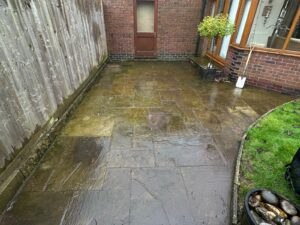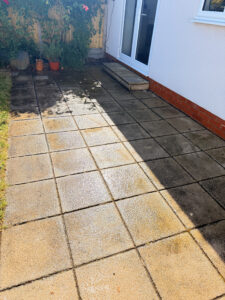
A deck can be a great place to relax, enjoy a summer meal or let the children play outdoors. However, when moss, algae, dirt and other organic growth build up, the surface can become slippery, particularly after rain.
Using the right decking cleaner can help remove this build-up and make your outdoor space cleaner and easier to maintain.
Slippery decking is more than an appearance issue. Rain and moisture can make a contaminated surface harder to walk across safely. The Health and Safety Executive (HSE) identifies contamination, cleaning, flooring and environmental conditions as factors that can contribute to slip risks.
For homeowners in Rugby, regular deck cleaning can therefore form part of sensible outdoor maintenance and help keep the garden looking cared for.
Why Does Decking Become Slippery?
Outdoor decking is constantly exposed to changing weather conditions. Rain, humidity and limited sunlight can create conditions where moss, algae and other organic matter develop.
Over time, these contaminants can settle on the surface and between the boards. When the decking becomes wet, the combination of moisture and organic growth can affect the grip available underfoot.
Leaves and other garden debris can make the problem worse. If they remain on the deck for extended periods, they can retain moisture and contribute to further organic build-up.
The problem may be particularly noticeable during autumn and winter. Shorter days, frequent rainfall and damp conditions can leave decking wet for longer.
Regular cleaning can help remove contamination before it develops into heavier build-up.
How Can Slippery Decking Affect Safety?
A slippery deck can present a greater slip risk when people walk across it, particularly when the surface is wet.
Children may run across outdoor areas without noticing that the decking has become slippery. Guests and other people using the garden may also encounter the same surface conditions.
This does not mean that every dirty or wet deck is automatically dangerous. However, visible algae, moss, persistent dampness and a slimy surface are useful signs that the decking needs attention.
The HSE advises that contamination can contribute to slips and that effective cleaning can help manage this type of risk. Its guidance also highlights the importance of using an appropriate cleaning method and taking care around wet surfaces during and after cleaning.
Although HSE guidance is primarily focused on workplace safety, the principles around contamination and maintaining suitable walking surfaces can also provide useful context for outdoor surface maintenance.
A clean deck is not a guarantee against slips, particularly when it is wet, but removing excessive moss, algae and other contamination can form part of sensible maintenance.
What Does the HSE Say About Slips and Trips?
The Health and Safety Executive identifies contamination as an important factor in slip accidents. Its guidance explains that water, dirt and other contaminants can affect the grip available from a walking surface.
HSE also advises that cleaning itself can introduce temporary slip hazards because surfaces may remain wet while they dry. Using an appropriate cleaning method and managing access to wet areas are therefore important considerations.
For homeowners, this reinforces the importance of allowing freshly cleaned decking to dry before it is used normally.
For more information, see the HSE guidance on preventing slips and trips.
Signs Your Deck Needs Cleaning
Knowing when to clean your decking can help prevent heavy build-up. Look out for changes in colour, texture and surface condition.
Common signs include:
| Sign | What it may indicate |
|---|---|
| Green patches | Algae or other organic growth |
| Dark marks | Dirt, moisture or biological build-up |
| Black spots | Mould, lichen or accumulated contamination |
| Slimy texture | Moisture combined with organic growth |
| Leaves collecting between boards | Organic debris and restricted drainage |
| Slippery surface after rain | Surface contamination affecting underfoot grip |
| Dull or weathered appearance | General dirt and environmental exposure |
You may also notice that the decking looks different from its original appearance. This can happen gradually, making the change easy to overlook.
If the deck feels unusually slippery when wet or has visible organic growth across several boards, it may be worth arranging an inspection and considering professional cleaning.
Why the Right Decking Cleaner Can Make a Difference
Choosing the right decking cleaner is important because wooden decking requires a different approach from concrete, block paving and other hard surfaces.
Simply applying excessive pressure is not necessarily the best solution. Timber can be more sensitive to aggressive cleaning, particularly when the boards are weathered, soft or already showing signs of damage.
A suitable cleaning method should take the material, condition and level of contamination into account. The aim is to remove dirt and organic growth without unnecessarily damaging the timber.
Jet Wash Innovations provides exterior cleaning services in Rugby and uses different cleaning approaches according to the surface being treated.
A surface-led approach can help ensure that the cleaning method is appropriate for the condition of the decking rather than relying on the same process for every outdoor surface.
Pressure Washing vs Soft Washing for Decking
Many homeowners assume that higher pressure automatically means better cleaning. That is not necessarily the case.
Pressure washing can be effective on durable surfaces such as concrete and some types of paving. Timber decking, however, may require more controlled treatment.
Soft washing uses lower pressure alongside suitable cleaning solutions. This can help address biological growth while reducing the mechanical force applied to the surface.
The appropriate method depends on the decking material, its condition and the type of contamination present.
A professional assessment can help determine whether pressure washing, soft washing or a combination of techniques is more appropriate.
How Does Professional Deck Cleaning Work?
Professional deck cleaning usually starts with an inspection. This allows the cleaner to assess the material and identify areas affected by algae, moss, dirt or staining.
The surface can then be prepared before cleaning begins. Loose leaves, dirt and other surface debris should be removed so the cleaning process can focus on more established contamination.
The cleaning method can then be selected according to the deck’s material and condition. A controlled approach can be used to remove contamination while taking care around joints, edges and areas that may be more vulnerable.
Once cleaning is complete, the surface can be checked for any remaining areas that require attention.
Depending on the condition of the decking, additional maintenance or protective treatment may also be worth considering.
The objective is not simply to make the deck look cleaner. Appropriate exterior maintenance can also make the surface easier to care for between professional cleans.
How Often Should Decking Be Cleaned?
There is no single cleaning schedule that suits every garden.
Decking located beneath trees may collect more leaves and organic debris. Areas that receive little direct sunlight may remain damp for longer. Similarly, decks exposed to frequent rainfall can develop moss and algae more quickly.
A practical approach is to inspect the surface regularly, particularly after periods of wet weather.
Spring can be a useful time for a thorough clean because winter moisture and debris may have left significant build-up. However, a deck that becomes visibly contaminated during another season does not necessarily need to wait until spring.
Regular maintenance can also make future cleaning easier because heavy layers of contamination have less opportunity to develop.
Simple Ways to Keep Your Deck Cleaner
Professional cleaning can deal with established contamination, but simple maintenance between cleans can also help.
Remove leaves and organic debris
Keep leaves, twigs and garden debris from accumulating on the surface. Check between the boards and remove material that could interfere with normal drainage.
Help the area dry
Look for sections that remain damp for extended periods. Overhanging vegetation can restrict sunlight and airflow, so keeping surrounding plants under control may help the area dry more effectively.
Avoid unsuitable cleaning products
Do not use harsh cleaning products without checking whether they are suitable for your decking material. Incorrect products or aggressive cleaning techniques can affect the appearance and condition of timber.
Allow the surface to dry after cleaning
A freshly cleaned deck may remain wet for a period after treatment. Avoid normal foot traffic until the surface is sufficiently dry.
This is consistent with HSE guidance, which notes that cleaning can itself create temporary slip hazards while surfaces remain wet.
If you are unsure about the appropriate cleaning method, professional advice can help reduce the risk of unnecessary damage to the timber.
Why Choose Jet Wash Innovations for Exterior Cleaning in Rugby?
Jet Wash Innovations provides exterior cleaning services across Rugby and surrounding Warwickshire areas.
The company offers a range of exterior cleaning services, including driveway, patio, roof, gutter, fence and soft washing solutions.
Its approach is based on assessing the surface before selecting an appropriate cleaning method. This can be particularly useful when dealing with materials that may be affected by excessive pressure.
For homeowners looking for exterior cleaning Rugby, assessing the surface first can help ensure that the cleaning process is suitable for the property’s materials and condition.
The company also uses biodegradable cleaning products as part of its exterior cleaning approach.
A Cleaner Deck Can Help You Enjoy Your Garden Again
A deck should be a comfortable part of your outdoor space, not an area you avoid because it feels slippery underfoot.
Moss, algae, leaves and general dirt can gradually change the appearance and condition of decking. Rain can then make an already contaminated surface feel even more slippery.
Using an appropriate decking cleaner and maintaining the surface regularly can help remove unwanted build-up and keep the area looking cared for.
If your decking has become heavily contaminated or you are unsure which cleaning method is suitable, professional exterior cleaning can provide an approach based on the material and its condition.
For additional information about managing slip and trip risks, see the Health and Safety Executive’s guidance on preventing slips and trips.
If your deck in Rugby needs attention, contact Jet Wash Innovations to discuss your exterior cleaning requirements and arrange a suitable cleaning service.
Contact Jet Wash Innovations to discuss your decking cleaning needs.
Frequently Asked Questions
Decking can become slippery when moss, algae, dirt and other organic material build up on the surface. Rain can make this contamination more slippery, particularly during cooler and wetter months.
It depends on the type and condition of the decking. Excessive pressure can damage timber, so the cleaning method should be selected according to the surface. A controlled or soft washing approach may be more suitable for some wooden decks.
There is no fixed schedule for every property. Decks surrounded by trees, shaded areas or persistent dampness may require more frequent cleaning. Regular inspections can help identify when cleaning is needed.
Professional cleaning can help remove established surface contamination such as moss and algae. The method used should be suitable for the decking material and its condition.
Removing moss, algae and other surface contamination can help address factors that contribute to a slippery surface. However, cleaning cannot guarantee that decking will always be slip-free, particularly when the surface is wet.