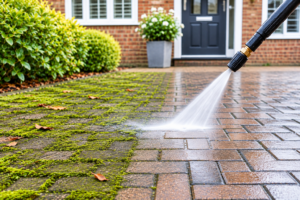
Your driveway is one of the most frequently used outdoor areas of your home. However, regular exposure to rain, shade and changing temperatures can encourage moss and algae to grow on its surface. Without regular driveway cleaning in Rugby, these growths can create slippery conditions and increase the risk of accidents.
Moss and algae commonly appear on concrete, block paving, tarmac and natural stone. They often start as small green patches before spreading across larger areas. Although they might initially seem like a minor appearance issue, they can become a safety concern, particularly during wet and cold weather.
For homeowners, understanding the risks of leaving these growths untreated is an important part of property maintenance. Regular driveway moss removal helps manage surface growth, maintain a cleaner outdoor area and reduce avoidable hazards.
Why Do Moss and Algae Grow on Driveways?
Moss and algae develop when outdoor surfaces provide suitable conditions for growth. In the UK, frequent rainfall, damp weather and limited sunlight can make many driveways vulnerable.
Areas beneath trees, beside walls and along garden borders often receive less direct sunlight. As a result, moisture can remain on these surfaces for longer.
Moss generally grows well in damp, shaded conditions. Algae can also form a green film on paving, concrete and other hard surfaces. According to the Royal Horticultural Society (RHS), these growths are common on hard surfaces and can make driveways, paths and steps slippery.
Several factors can encourage their growth:
- Frequent rainfall: Regular moisture creates favourable conditions for moss and algae.
- Poor drainage: Standing water allows damp conditions to persist.
- Limited sunlight: Shaded areas take longer to dry.
- Organic debris: Fallen leaves, soil and other garden waste can collect on the driveway.
- Irregular maintenance: Dirt and surface deposits can build up when cleaning is delayed.
These conditions can affect properties in Rugby, particularly during periods of frequent rainfall and reduced daylight.
5 Safety Risks of Leaving Moss and Algae on Your Driveway
Moss and algae should not be treated as purely cosmetic problems. When they spread across frequently used areas, they can affect how safely people walk and move around the property.
1. Increased Risk of Slips and Falls
One of the biggest concerns is the slippery surface that moss and algae can create.
When these growths become wet, they can reduce the grip available under footwear. This makes walking across the driveway more difficult, especially on smooth paving, sloped entrances and areas near steps.
The risk can increase during autumn and winter when rain, frost and limited daylight become more common.
A person carrying shopping, pushing a pram or walking towards a parked vehicle may not notice a slippery patch until they lose their footing.
Regular driveway moss removal helps address this issue before growth spreads across busy walking routes.
2. Greater Risks for Children and Older Residents
Driveways are shared spaces used by people of different ages. Children may run or play outside, while older residents may need more time and stability when walking.
A slippery driveway can make everyday activities less safe for both groups.
For example, an older person walking towards their car may struggle to regain balance after stepping on a damp patch of algae. Similarly, children playing near the entrance could slip while running across a moss-covered surface.
Homeowners should pay particular attention to pathways, entrances and areas connecting the driveway to the front door.
Keeping these spaces clean and managing slippery growth can help reduce avoidable accidents.
3. Reduced Grip on Sloped Driveways
Not every driveway has a completely flat surface. Some properties have sloped entrances or uneven sections designed to direct rainwater away from buildings.
However, moss and algae can make these areas more difficult to use.
When water runs across a surface covered in organic growth, it can create particularly slippery conditions. Vehicles may also experience reduced traction in certain circumstances, especially when tyres encounter loose debris or wet surface contamination.
This does not mean every moss-covered driveway will cause vehicle problems. However, homeowners should not ignore visible growth on steep entrances, turning areas or pedestrian access points.
For related exterior surface cleaning, explore these professional patio cleaning services.
4. Poor Visibility of Surface Defects
Moss, algae and general dirt can make it harder to identify the actual condition of your driveway.
For example, a thick layer of growth may cover small cracks, damaged joints or uneven paving blocks. These defects can become trip hazards if they remain unnoticed.
Once the surface has been cleaned, homeowners can inspect the driveway more easily and identify areas that need additional attention.
It is important to remember that cleaning does not repair structural damage. Loose blocks, deep cracks and drainage problems may require separate maintenance.
Nevertheless, a clean surface makes routine inspections easier.
5. Faster Build-Up of Dirt and Debris
Moss and algae often appear alongside other forms of outdoor contamination. Leaves, soil, dust and general dirt can collect in the same areas.
When this material remains on the driveway, it can make the surface look neglected and create additional maintenance work.
Furthermore, organic debris may retain moisture, allowing favourable conditions for further growth.
A regular cleaning routine helps prevent excessive build-up and makes future maintenance easier. It also helps homeowners spot developing problems before they become more difficult to manage.
Why Is Driveway Cleaning Important During UK Weather Changes?
The UK climate creates different maintenance challenges throughout the year. Rugby homeowners should consider seasonal changes when planning driveway maintenance.
Rainfall, temperature changes and reduced daylight can all influence how quickly moss and algae become noticeable.
The following table provides a practical maintenance guide.
| Season | Common driveway problems | Recommended maintenance |
|---|---|---|
| Spring | Winter dirt, moss and algae growth | Inspect paving, remove debris and arrange a thorough clean if needed |
| Summer | Dust, weeds and dry surface deposits | Sweep regularly and check drainage points |
| Autumn | Fallen leaves, damp patches and algae | Clear leaves frequently and monitor shaded areas |
| Winter | Persistent moisture, frost and slippery growth | Check walking routes and address slippery areas when conditions allow |
Spring: Remove Winter Build-Up
Spring is a useful time to inspect the driveway after the colder months.
Winter rain and limited sunlight may leave moss and algae across shaded sections. Start by removing leaves, soil and loose debris.
If substantial growth remains, consider arranging a professional clean to improve the appearance and condition of the surface.
Summer: Maintain a Clean Surface
Warmer weather can provide more opportunities for routine maintenance.
Although some surfaces dry faster during summer, shaded areas may continue to retain moisture. Regular sweeping and checking drainage can help prevent dirt from collecting.
This is also a suitable time to inspect paving joints and identify minor defects.
Autumn: Prepare for Wet Weather
Autumn is particularly important for driveway maintenance.
Fallen leaves can become slippery when wet. In addition, frequent rainfall can encourage moss and algae to spread.
Clear leaves regularly and check areas that remain damp throughout the day. Homeowners should also pay attention to entrances and frequently used walking routes.
Winter: Monitor Slippery Areas
Winter brings additional challenges, including frost, ice and persistent dampness.
Even a recently cleaned driveway can become slippery when icy conditions develop. Therefore, homeowners should continue checking the surface rather than assuming one cleaning session will provide year-round protection.
Avoid using pressure washers during freezing conditions or when water may freeze on the surface.
How Can You Prevent Moss and Algae from Returning?
Cleaning removes existing contamination, but preventing future growth requires ongoing attention.
A few simple maintenance habits can help keep your driveway in better condition.
Improve Drainage
Check whether water collects in particular sections of your driveway. Blocked drainage channels and poorly directed runoff can leave areas damp for longer.
Where drainage problems are present, address the underlying issue rather than relying on cleaning alone.
Keep the Surface Clear
Sweep away fallen leaves, soil and garden debris before they accumulate.
Pay particular attention to areas near hedges, trees and garden borders. These locations often collect organic material and receive less sunlight.
Reduce Excessive Shade
Overhanging branches can limit sunlight and restrict airflow.
Where suitable, trimming back vegetation may help the surface dry more quickly. Always consider plant health and local wildlife before carrying out garden work.
Arrange Periodic Professional Cleaning
Regular maintenance can help prevent heavy contamination from becoming established.
However, the right cleaning frequency depends on the driveway material, exposure to shade, drainage and surrounding vegetation.
Some properties may need attention more frequently than others. A professional assessment can help determine the most suitable cleaning schedule.
Why Choose Professional Driveway Cleaning in Rugby?
Removing moss and algae from a driveway requires more than simply directing a high-pressure water jet at the surface.
Different materials respond differently to cleaning methods. Excessive pressure can damage delicate paving, disturb jointing sand or affect the surface finish.
Professional cleaning takes the material and its condition into account before selecting an appropriate approach.
Jet Wash Innovations provides exterior cleaning services for residential and commercial properties in Rugby and surrounding areas. Its approach focuses on selecting suitable cleaning methods for different surfaces and levels of contamination.
Homeowners can also benefit from professional assistance when growth has spread across large areas or when ordinary sweeping no longer makes a difference.
For further information about available treatments, see the driveway cleaning and exterior cleaning services offered by Jet Wash Innovations.
Is DIY Driveway Moss Removal Enough?
Small patches of moss can sometimes be removed through routine brushing and basic maintenance. However, widespread growth may require more thorough treatment.
DIY cleaning also comes with certain risks.
Using excessive pressure can damage some paving materials. Incorrect cleaning products may affect nearby plants, and poor handling of equipment can create additional safety hazards.
Furthermore, simply removing visible growth does not always address the conditions that allowed it to develop.
For larger areas, professional driveway moss removal can provide a more suitable solution. The cleaning method should match the driveway material, level of contamination and overall condition.
It is also worth remembering that moss and algae can return when damp and shaded conditions remain. No cleaning service can guarantee permanent prevention.
When Should You Arrange Driveway Cleaning?
You should consider arranging a professional assessment when:
- Green or dark patches have spread across frequently used areas.
- Your driveway becomes noticeably slippery after rainfall.
- Moss is growing between paving blocks or along the edges.
- Dirt and algae remain despite regular sweeping.
- You notice surface deposits covering cracks or uneven sections.
Homeowners searching online for driveway cleaning near me should look for a service that understands different driveway materials and can explain the cleaning process before starting work.
A suitable maintenance plan can help keep outdoor areas cleaner and make potential hazards easier to identify.
Conclusion
Leaving moss and algae untreated can create avoidable safety concerns around your property. Slippery surfaces, reduced visibility of defects and persistent moisture can all make a driveway more difficult to maintain.
For homeowners in Rugby, regular driveway maintenance is especially important because changing UK weather conditions can encourage recurring growth.
By clearing debris, checking drainage and arranging suitable cleaning when needed, you can maintain a cleaner and safer outdoor space.
Jet Wash Innovations provides exterior cleaning services to help homeowners manage driveway contamination and maintain their property’s appearance. Taking action before moss and algae spread can make routine maintenance easier.
Contact Jet Wash Innovations today to discuss your driveway cleaning requirements in Rugby and arrange a free, no-obligation quote.
Frequently Asked Questions
1. How often should I arrange driveway cleaning in Rugby? +
Most driveways benefit from an annual inspection and cleaning when visible dirt, moss or algae begins to accumulate. However, shaded driveways and areas with poor drainage may require more frequent attention.
2. Does moss make a driveway slippery? +
Yes. Moss can contribute to slippery conditions, particularly when wet. It can reduce grip underfoot and increase the risk of slips and falls on frequently used outdoor surfaces.
3. What is the best way to remove moss from a driveway? +
The most suitable method depends on the driveway material and the amount of growth. Brushing may help with small patches, while professional pressure washing or an appropriate treatment may be more suitable for widespread contamination.
4. Can driveway moss and algae return after cleaning? +
Yes. Moss and algae can return when damp, shaded conditions remain. Regular sweeping, improved drainage and periodic cleaning can help manage recurring growth.
5. Is professional driveway cleaning better than DIY cleaning? +
Professional cleaning can be useful for larger driveways and stubborn contamination. A suitable cleaning method helps remove accumulated dirt while reducing the risk of damage caused by incorrect pressure or cleaning products.